

Christianity Alone: A Theology of Solitude
Blending historical and constructive theological methods, Christianity Alone presents a hopeful vision of what is possible when people practice their Christian faith in solitude alongside a bold argument for the enduring importance of faith-in-community and social connection. The result is a constructive theology of solitude applicable to the present social moment—in which loneliness is ascendant and community in decline throughout the North Atlantic world.
The book’s animating question is: What might it mean for Christianity to offer a path towards overcoming the ubiquitous failures of human desire that modern loneliness represents? In crafting an answer, Christianity Alone draws upon a theoretical and theological archive consisting of the Anglican common-prayer tradition; the writings of Jacques Derrida and Paul Tillich; Christian hermitic literatures; decolonial critiques of Christian settler colonialism; and the scriptural corpus. The book deploys these resources in a way that centres the human in order to develop an embodied and aesthetically nuanced theology oriented away from the immediacy of modernity’s here and now.
Christianity has the internal resources to guide people, theoretically as well as practically, out of the experience of loneliness and into that of solitude. Two of the key ways in which it does so are through liturgical practices and theological methods that enact the Christian hope that one is never truly alone because one is always inhabiting a living tradition as well as, more substantially, the presence of the omnipresent God.
Forthcoming from Fortress Press on a TBD date.
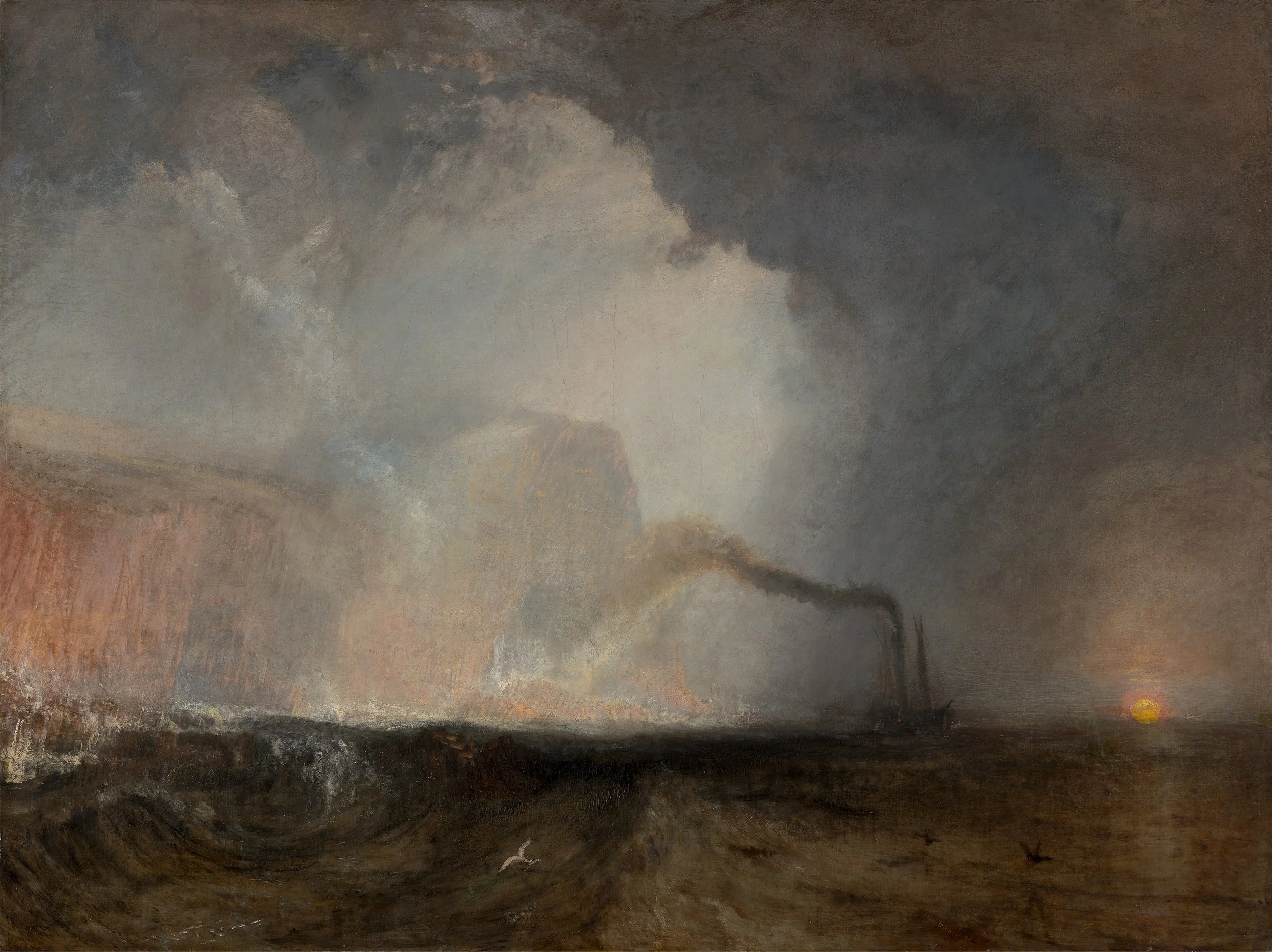
Joseph Mallord William Turner, 1775–1851, Staffa, Fingal's Cave, exhibited 1832; Yale Center for British Art, Paul Mellon Collection; https://collections.britishart.yale.edu/catalog/tms:5018.